What’s changing?
Chemically treated timber will continue to be accepted at the Bridgetown Waste Facility. However, it must now be separated from general waste and placed in a dedicated skip bin for transport to a higher-class landfill. A disposal fee will apply to cover these costs.
What is defined as chemically treated timber?
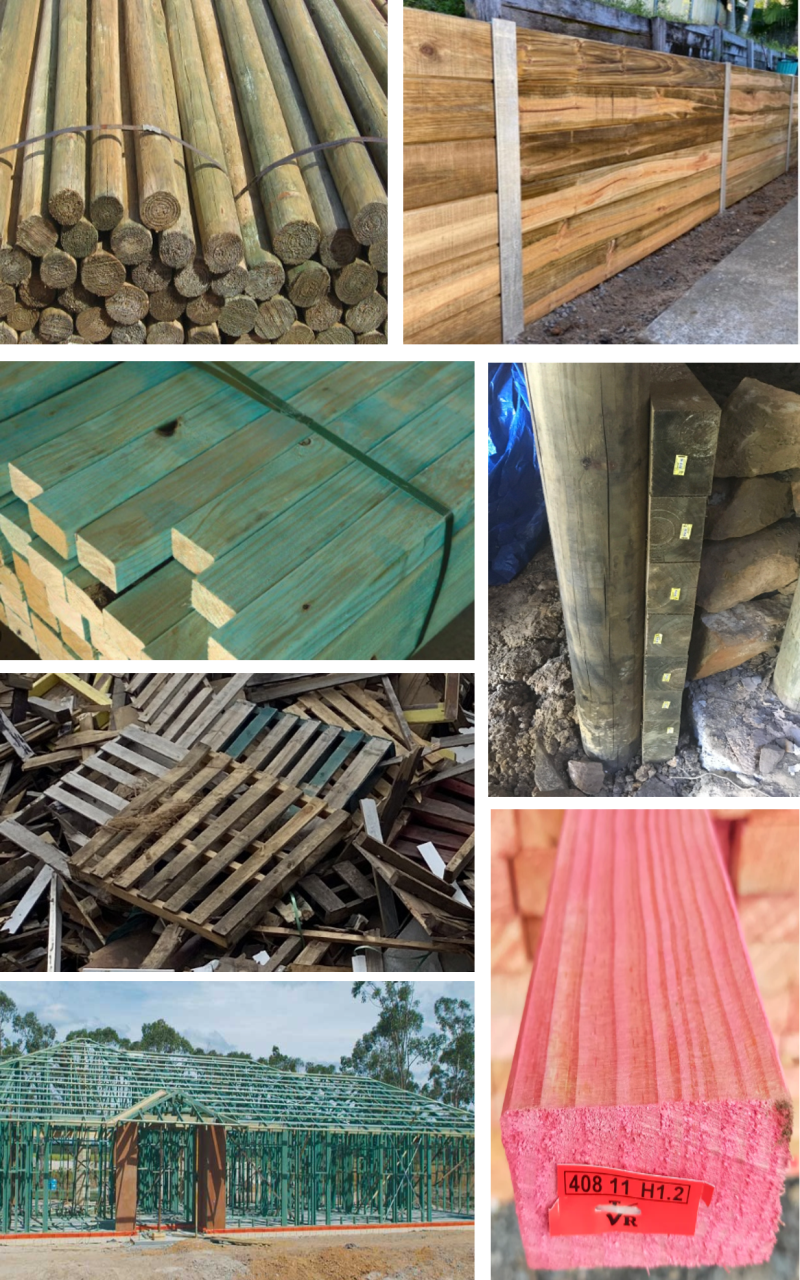
Chemically treated timber is timber that has been treated with preservatives to protect it from termites, fungi, rot and weathering.
Common examples include:
- Fence posts
- Retaining wall timbers
- Treated pine sleepers
- Outdoor decking and pergolas
- Landscaping timbers
- Timber pallets (where preservative treated)
- Structural treated pine used in construction.
Common preservative types are:
- CCA - Chromium Copper Arsenic
- ACQ - Alkaline Copper Quaternary
- LOSP - Light Organic Solvent Preservative
- H1 to H6 timbers.
Which wooden products can still go in General Waste?
The following materials are generally accepted as general waste:
- MDF (medium density fibreboard)
- Particle board / chipboard
- Plywood
- Laminated timber products
- Melamine furniture
- Painted or varnished furniture
- Heat treated, or untreated timber
These materials will continue to be disposed of as general waste in accordance with the current waste facility licence requirements.
Why is this changing?
The Department of Water and Environmental Regulation (DWER) has advised that chemically treated timber can no longer be disposed of in the same way as general waste at the Bridgetown Waste Facility. As a result, chemically treated timber must now be collected separately and transported to a landfill licensed to accept this material.
While treated timber has historically been accepted as general waste at the facility, updated regulatory requirements mean this is no longer permitted.
To support the community, the Shire will continue to accept chemically treated timber at the Bridgetown Waste Facility in a dedicated collection bin. The material will then be transported to an appropriately licensed landfill for disposal. As the material must now be transported to and disposed of at an external licensed landfill, additional disposal costs apply.
The Shire understands this represents a change for residents, builders and skip bin operators. This information has been prepared to help explain the new requirements and how to minimise disruption and costs.
Why separation is important
As chemically treated timber cannot be disposed of in the general waste, it must be able to be separated and stockpiled in a dedicated bin to be accepted.
Separation also ensures that you are only paying for the waste that is treated timber, instead of the whole load at the treated timber price (which is much higher).
If treated timber is buried in a mixed load, facility staff may be unable to identify it and it can be difficult to remove. This will cause delays and may lead to the load being rejected.
Separating treated timber before you arrive helps reduce delays, improves safety and ensures the load can be accepted.
How should I bring treated timber to the waste facility?
Before arriving at the facility:
✅ Separate treated timber from general waste.
✅ Transport it in a separate load where practical, or
✅ If it must be transported with other waste, place it on top of, or clearly separated from the rest of the load where it can be easily identified and removed.
What happens when I arrive at the facility?
- Advise staff that your load contains chemically treated timber.
- Follow staff directions.
- Drop off chemically treated timber in the designated bin.
- Dispose of any remaining general waste or recyclables separately.
What happens if my load contains mixed treated timber?
If treated timber is identified within a mixed load, customers will be asked to separate the material before it is able to be accepted. Waste attendants cannot separate this material for you.
Loads containing significant amounts of treated timber that cannot be reasonably separated by the customer may be refused, or the whole load charged at the treated timber price (depending on the available volume in the bin – at the gatehouse attendants’ discretion).
What else must not be mixed into loads?
- Asbestos
- Electrical waste (e-waste) and batteries
- Oil, tyres and mattresses
It is encouraged that scrap metal is also separated to be recycled.
How is the treated timber fee calculated?
Unlike general waste dropped off to the facility and landfilled on site, chemically treated timber must be transported from Bridgetown to a higher-class landfill for disposal.
The treated timber fee of $170.80 per cubic metre is made up of the following costs:
- Hire fees for the bin
- Service to transport the material to Dardanup
- Disposal at the external landfill.
The fee is based on a user-pays principle, meaning those generating treated timber waste cover the disposal costs rather than the wider community.
Suggestion for builders and skip bin users
To minimise costs and avoid re-sorting:
- Keep treated timber separate during demolition or building works
- Stockpile treated timber separately on site
- Use a dedicated IBC, trailer or skip bin to stockpile separately
- Avoid burying treated timber beneath other waste
Frequently Asked Questions
Can I still bring treated timber to the Bridgetown Waste Facility? Yes. Treated timber can still be accepted at the Bridgetown Waste Facility. It will be placed in a dedicated skip bin and transported to an approved external landfill for disposal.
Can I mix treated timber with general waste or untreated timber? We strongly recommend keeping treated timber separate. Large mixed loads may be refused if the treated timber cannot be safely identified and removed. In some cases, small mixed loads may be accepted at the attendant's discretion, however the entire load may be charged at the treated timber rate.
How can I tell if timber is treated?
Timber that is chemically treated has traditionally had a blue / green tinge/dye effect (CCA). There are a range of other chemical treatments and associated dyes used from a pink or grey primer coat to red or blue tinting. Often, they are accompanied with a kerosene smell. Some timbers will have a stamp to indicate the treatment type. However, not all treated timber is clearly marked.
There are also specific types of timbers that have a chemical treatment to extend their life – posts which are buried in the ground, some pallets, building materials and timbers used outdoors and in the garden.
There is a heat treatment process undertaken for some pallets and timbers. These do not have a dye tint and are marked HT. These timbers have multiple reuse options, though if brought to the tip will be landfilled as un (chemically) treated timber and charged as general waste.
When does this start?
The change is expected to commence once the dedicated skip bin arrives at the Bridgetown Waste Facility, currently anticipated between mid to late October 2026. The Shire will confirm the commencement date closer to the time.
In the meantime, treated timber will continue to be accepted in mixed loads as general waste, and will be charged at the general waste fee.