Bushfire and My Development
What is Bushfire Prone?
The Department of Fire and Emergency Services (DFES) identifies areas considered at risk in the event of a major bushfire due proximity to large areas of bushland.
These areas are officially declared Bushfire Prone and are subject to assessment for fire risk whenever new development is proposed or an existing property undergoes a change of use that may affect bushfire risk.
Is my Property Bushfire Prone?
DFES has created an online Map of Bush Fire Prone Areas showing all areas in WA that are prone to bushfires. All areas shaded in pink on the map are bushfire prone.
What happens if I am in a bushfire prone area?
Being in a Bushfire Prone Area does not affect approved building or land use. The legislation is not retrospective. However, if you plan to build or develop in a designated Bushfire Prone Area, you may need to:
- Undertake a Bushfire Attack Level (BAL) report
- Meet additional planning and building requirements
What is a bushfire attack level (BAL) report?
A BAL assessment is carried out by a qualified bushfire assessor, who will determine the Bushfire Attack Level for your property. The assessment considers:
- Vegetation type and proximity
- Slope under the vegetation
- Fire Danger Index (FDI) for the region
BAL Levels and Risk
|
BAL Levels and Risk
|
|
Bushfire Attack Level (BAL)
|
Description of Risk
|
Commentary
|
|
BAL-LOW
|
Insufficient risk to warrant specific construction
|
Minimal BAL requirements
|
|
BAL-12.5
|
Low radiant heat; mainly ember attack
|
Standard construction largely sufficient
|
|
BAL-19
|
Moderate risk; increased ember attack
|
Construction must resist embers and some heat
|
|
BAL-29
|
High risk; significant ember and radiant heat
|
Additional construction measures required
|
|
BAL-40
|
Very high risk; ember attack, radiant heat and exposure to flames
|
Advanced construction methods required
|
|
BAL-FZ (Flame Zone)
|
Extreme risk; direct flame exposure
|
Highest construction standard; BMP required
|
The BAL assessment will determine the level of fire intensity which may be experienced in a major fire which affects the subject property.
The BAL assessment determines the construction standard needed to protect your development from embers, heat and flames.
The Shire only accepts accredited bushfire assessors and reports that are no more than 1 year old.
When do I submit a BAL report?
|
Stage
|
Type of Proposed Development
|
|
Development Application
|
Single dwelling (house),
Ancillary Dwelling,
Conversion of shed/outbuilding to dwelling,
For all properties greater than 1100m².
|
|
Grouped Dwelling
Multiple Dwelling
|
|
Subdivision Application
|
All subdivisions in Bushfire Prone Areas
|
|
Building Permit
|
Single dwelling (house)
Ancillary dwelling
Conversion of shed/outbuilding to dwelling
|
Who can prepare a BAL report?
Only accredited bushfire assessors can prepare BAL reports.
You can find the accredited bushfire assessors on the Fire Protection Association Australia (FBA) website.
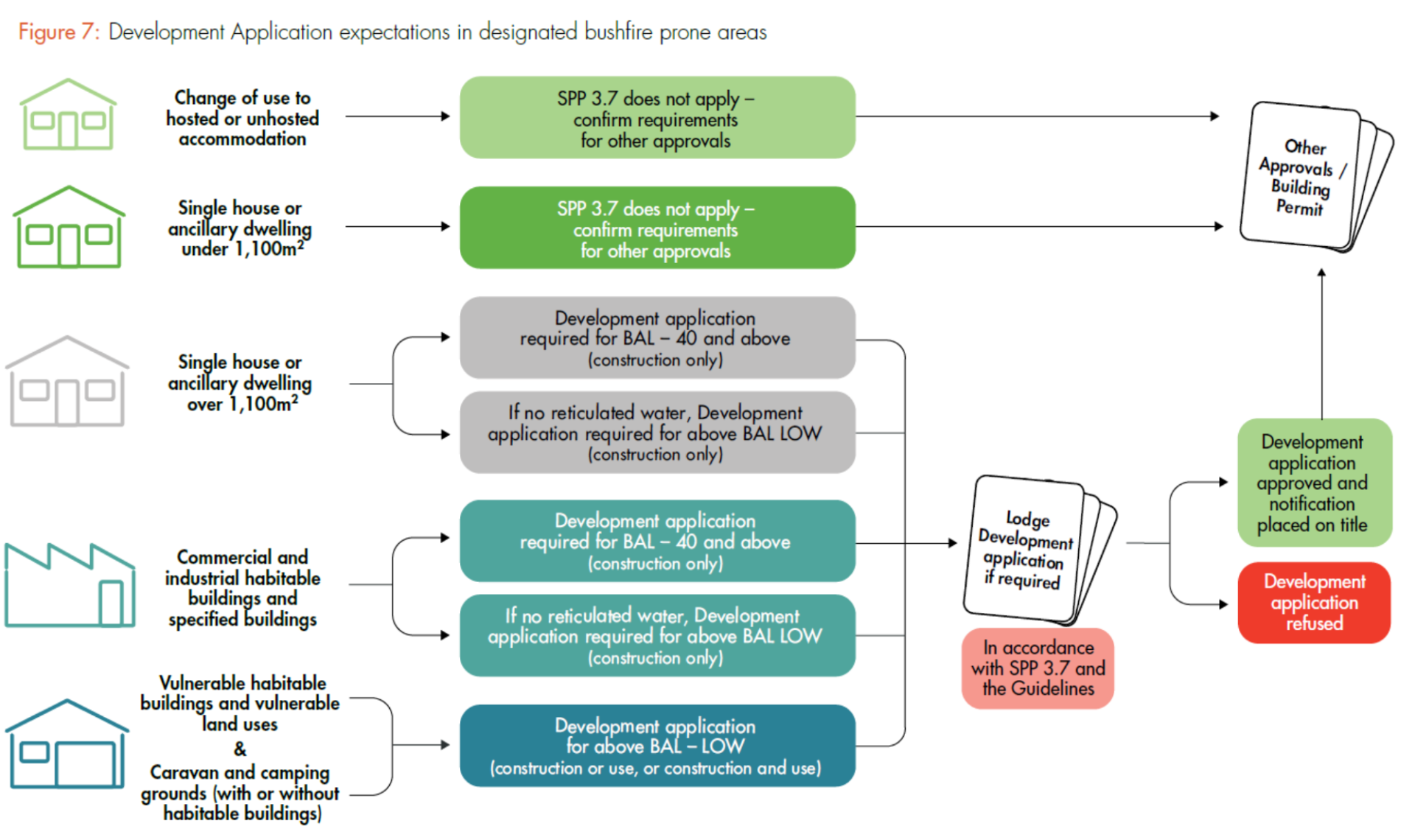
Are there any exemptions from getting a BAL report as part of a development application?
Please see the following flowchart for exemptions.
What happens if my property is classed as BAL-40 or BAL-FZ?
If your BAL assessment is BAL-40 or BAL-FZ, you must also prepare a Bushfire Management Plan (BMP).
A BMP includes;
- Assessment of bushfire hazard and risk
- Compliance with Planning for Bushfire Guidelines
- Measures to protect people, property and infrastructure
Properties greater than 1100m² require a development application for proposed single dwellings, ancillary dwellings and conversion of sheds/outbuildings to dwellings, even if all other planning requirements are met.